
ABOUT IVS   DEGREE PROGRAMS   ADMISSIONS    GALLERY   WORKSHOPS   ALUMNI   CONTRIBUTE TO IVS          


The curriculum is planned to equip the student with vision, knowledge, skills and methodology to function successfully as a textile designer in the industry, in a composite textile mill, the craft sector or as an independent entrepreneur.

Courses are structured to achieve creative problem solving abilities and emphasis is placed on the quality of design in relation to the product through the application of colour, design theory and the rich traditional history of textiles. The Board of Studies is an integral part of the Textile Department and oversees the curriculum development.

It is important for students to work on interpersonal skills and as a team since they are required to interact with people from the industry, designers, technicians, crafts people and the community. The assignments are planned with the aim of developing skills, promotion of analytical thinking, observation and communication skills. Students develop perception and the required skills to create designs suitable for specific fields including interiors and apparel. Research is conducted on contemporary textiles and apparel to develop consciousness of existing textiles in the local and global markets.

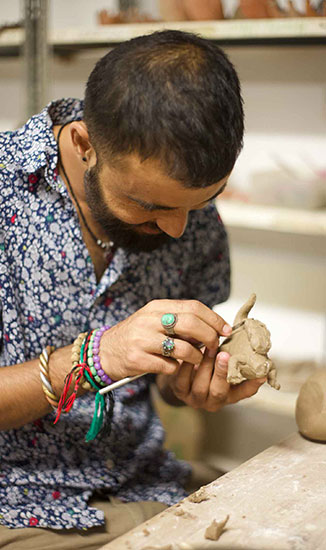
An introduction to basic print design provides a grammar of different repeats. The emphasis is on hands on learning where the source is evolved and translated onto designs suitable for apparel, home textiles, craft intervention and accessories. Different techniques of screen-printing block printing, discharge and other resist methods are introduced. A study of vegetable dyes is done to enhance awareness of natural and indigenous materials. The students also work extensively with chemical dyes through theory and hands on practice. The weaving curriculum provides a thorough understanding of handloom and weaving techniques. Each student learns to design and execute simple projects on the loom, from the preparation of the warp and the feeding of the loom to the finished product. The student is also familiarized with regional weaving techniques. Weaving is conducted under the guidance of a faculty and master weavers. Students independently weave fabric suitable for apparel, hangings, tapestries, upholstery, home textiles and rugs in basic and complex weave structures. Off loom projects are conducted in the studio where students are encouraged to work with natural found materials to explore different techniques of basketry, for a variety of products. They visit local weaving centers, hand looms and power looms to develop a better understanding of functional aspects of intended products and an appreciation of the technical skills involved in the completion of woven textile products.

Print design, weaving and craft intervention are offered as majoring subjects. The student makes the choice at the beginning of the sixth semester. In the sixth and seventh semesters the students are required to choose one of the three courses, printmaking, print design, weaving and craft intervention as a minor.

A weekly seminar class covers the historic evolution of the traditional and contemporary textiles of the Indo- Pakistan (woven, printed and embroidered). Lectures are conducted in conjunction with slide shows and study of museum specimens. A basic theory course is conducted by professionals from the industry to give an introduction to merchandizing.

A sensitive approach to dealing with craft and craftspeople is an important part of the department's responsibility. Students are encouraged to learn from tradition and evolve their work towards market sustainability and contemporary sensibilities.

Each student develops a portfolio, evolves a professional direction and works towards a final project. They are expected to work on problems of increasing complexity and to expand upon personal career goals. Submission of a written dissertation is essential in the 7 th semester. In the summer break between the 7 th and 8 th semesters students are sent for a 6 week internship to textile mills, N.G.O's working with textile craft, weaving units (mechanical and hand loom) to gain hands on experience of the professional areas.

As learning progresses and new demands are made on the designer the curriculum has the ability to accept changes, be modified and updated, to suit the demands of the market and clients, local and global.


Important | Curricula are continuously under review. The Indus Valley School reserves the right to alter, substitute, eliminate from or add to the list of courses and details at any time without notice.


Copyright © 2000-7 IVS | Feedback | Privacy | Credits